

Howes Mill Fish Hatchery Reservoir Report
Last Updated: April 15, 2026
°F
°F
mph
Wind
%
Humidity
Located in Dent County, Missouri, the Howes Mill Fish Hatchery is a privately owned facility that serves as a recreational destination for water resource and climate enthusiasts.
Summary
Built in 1961, this earth dam structure stands at a height of 30 feet and has a storage capacity of 321 acre-feet. Surrounded by the serene Rowe Branch stream, the hatchery covers a surface area of 20 acres and is a popular spot for fishing and outdoor activities.
Despite its low hazard potential and not being regulated by the state, the Howes Mill Fish Hatchery offers a unique opportunity to explore the intersection of water management and environmental stewardship. With its primary purpose being recreation, the hatchery provides a tranquil setting for visitors to learn about fish conservation efforts and enjoy the natural beauty of the Missouri landscape. The facility's condition assessment is currently listed as "Not Rated," indicating potential room for improvement and future enhancements.
As part of the St. Louis District, the Howes Mill Fish Hatchery stands as a testament to the importance of sustainable water resource management and the preservation of aquatic ecosystems. With its historical significance and ongoing commitment to recreational activities, this hidden gem in Boss, Missouri, offers a glimpse into the delicate balance between human interaction and nature's resilience in the face of climate change.
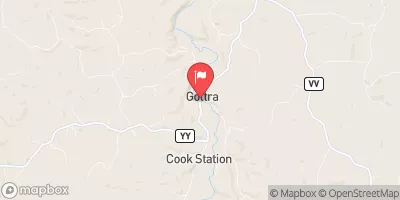
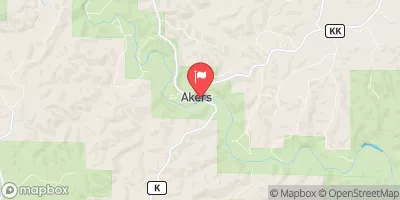
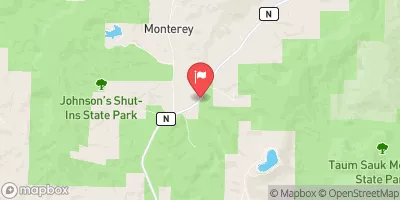
Regional Streamflow Levels
15-Day Long Term Forecast
Year Completed |
1961 |
Dam Height |
30 |
River Or Stream |
ROWE BRANCH |
Primary Dam Type |
Earth |
Surface Area |
20 |
Drainage Area |
105 |
Nid Storage |
321 |
Structural Height |
30 |
Hazard Potential |
Low |
Foundations |
Unlisted/Unknown |
Nid Height |
30 |
Seasonal Comparison
5-Day Hourly Forecast Detail
Dam Data Reference
Condition Assessment
SatisfactoryNo existing or potential dam safety deficiencies are recognized. Acceptable performance is expected under all loading conditions (static, hydrologic, seismic) in accordance with the minimum applicable state or federal regulatory criteria or tolerable risk guidelines.
Fair
No existing dam safety deficiencies are recognized for normal operating conditions. Rare or extreme hydrologic and/or seismic events may result in a dam safety deficiency. Risk may be in the range to take further action. Note: Rare or extreme event is defined by the regulatory agency based on their minimum
Poor A dam safety deficiency is recognized for normal operating conditions which may realistically occur. Remedial action is necessary. POOR may also be used when uncertainties exist as to critical analysis parameters which identify a potential dam safety deficiency. Investigations and studies are necessary.
Unsatisfactory
A dam safety deficiency is recognized that requires immediate or emergency remedial action for problem resolution.
Not Rated
The dam has not been inspected, is not under state or federal jurisdiction, or has been inspected but, for whatever reason, has not been rated.
Not Available
Dams for which the condition assessment is restricted to approved government users.
Hazard Potential Classification
HighDams assigned the high hazard potential classification are those where failure or mis-operation will probably cause loss of human life.
Significant
Dams assigned the significant hazard potential classification are those dams where failure or mis-operation results in no probable loss of human life but can cause economic loss, environment damage, disruption of lifeline facilities, or impact other concerns. Significant hazard potential classification dams are often located in predominantly rural or agricultural areas but could be in areas with population and significant infrastructure.
Low
Dams assigned the low hazard potential classification are those where failure or mis-operation results in no probable loss of human life and low economic and/or environmental losses. Losses are principally limited to the owner's property.
Undetermined
Dams for which a downstream hazard potential has not been designated or is not provided.
Not Available
Dams for which the downstream hazard potential is restricted to approved government users.
 Continue with Snoflo Premium