

Loon Lake Reservoir Report
Last Updated: April 29, 2026
°F
°F
mph
Wind
%
Humidity
Loon Lake, located in Jackson, Minnesota, is a gravity dam on Loon Creek with a primary purpose that goes beyond typical water resource management.
Summary
Completed in 1935, this dam stands at 8 feet tall and spans 30 feet in length, providing a storage capacity of 5000 acre-feet for its 707-acre surface area. Despite its low hazard potential, the dam received a satisfactory condition assessment during its last inspection in 2015, ensuring its structural integrity for the foreseeable future.
Owned by the local government and situated in the Omaha District, Loon Lake serves as a vital resource for the surrounding community, with a normal storage capacity of 3000 acre-feet and a maximum discharge rate of 265 cubic feet per second. Its relatively small drainage area of 32 square miles highlights its localized impact on water management in the region. With its buttress core design and unlisted foundation type, this dam exemplifies the engineering ingenuity of its time while also incorporating modern safety standards to meet regulatory requirements.
As climate change continues to impact water resources worldwide, the significance of dams like Loon Lake in managing water availability and flood control cannot be understated. With Jim Hagedorn (R) representing the area in Congress, the importance of maintaining and updating infrastructure like this dam remains a priority to ensure the resilience of local communities in the face of changing environmental conditions.
Regional Streamflow Levels
 Des Moines River At Jackson
|
1050cfs |
 Ocheyedan River Near Spencer
|
705cfs |
 Little Sioux River At Linn Grove
|
940cfs |
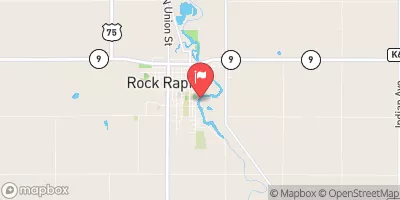 Rock River Below Tom Creek At Rock Rapids
|
517cfs |
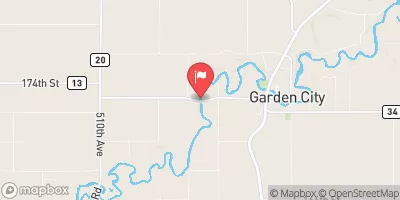 Watonwan River Near Garden City
|
1530cfs |
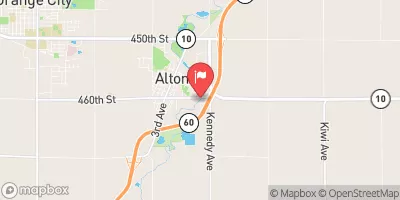 Floyd River At Alton
|
361cfs |
15-Day Long Term Forecast
Year Completed |
1935 |
Dam Length |
30 |
Dam Height |
7 |
River Or Stream |
LOON CREEK |
Primary Dam Type |
Gravity |
Surface Area |
707 |
Hydraulic Height |
0.5 |
Drainage Area |
32 |
Nid Storage |
5000 |
Structural Height |
8 |
Hazard Potential |
Low |
Foundations |
Unlisted/Unknown |
Nid Height |
8 |
Seasonal Comparison
5-Day Hourly Forecast Detail
Dam Data Reference
Condition Assessment
SatisfactoryNo existing or potential dam safety deficiencies are recognized. Acceptable performance is expected under all loading conditions (static, hydrologic, seismic) in accordance with the minimum applicable state or federal regulatory criteria or tolerable risk guidelines.
Fair
No existing dam safety deficiencies are recognized for normal operating conditions. Rare or extreme hydrologic and/or seismic events may result in a dam safety deficiency. Risk may be in the range to take further action. Note: Rare or extreme event is defined by the regulatory agency based on their minimum
Poor A dam safety deficiency is recognized for normal operating conditions which may realistically occur. Remedial action is necessary. POOR may also be used when uncertainties exist as to critical analysis parameters which identify a potential dam safety deficiency. Investigations and studies are necessary.
Unsatisfactory
A dam safety deficiency is recognized that requires immediate or emergency remedial action for problem resolution.
Not Rated
The dam has not been inspected, is not under state or federal jurisdiction, or has been inspected but, for whatever reason, has not been rated.
Not Available
Dams for which the condition assessment is restricted to approved government users.
Hazard Potential Classification
HighDams assigned the high hazard potential classification are those where failure or mis-operation will probably cause loss of human life.
Significant
Dams assigned the significant hazard potential classification are those dams where failure or mis-operation results in no probable loss of human life but can cause economic loss, environment damage, disruption of lifeline facilities, or impact other concerns. Significant hazard potential classification dams are often located in predominantly rural or agricultural areas but could be in areas with population and significant infrastructure.
Low
Dams assigned the low hazard potential classification are those where failure or mis-operation results in no probable loss of human life and low economic and/or environmental losses. Losses are principally limited to the owner's property.
Undetermined
Dams for which a downstream hazard potential has not been designated or is not provided.
Not Available
Dams for which the downstream hazard potential is restricted to approved government users.
Area Campgrounds
| Location | Reservations | Toilets |
|---|---|---|
 Robertson County Park
|
||
 Brown Park South Campground
|
||
 Brown Parik
|
||
 Robertson Park
|
||
 Anderson County Park Campground
|
||
 Grover's Marsh WMA
|
 Spirit Lake Near Orleans
 West Okoboji Lake At Lakeside Lab Near Milford
 140th Street 24728, Orleans
 Continue with Snoflo Premium