
Deerfield No. 4 Reservoir Report
Last Updated: December 5, 2025
Deerfield No.
°F
°F
mph
Wind
%
Humidity
Summary
4, a hydroelectric dam located on the beautiful Deerfield River in Shelburne Falls, Massachusetts, has been serving both energy production and recreational purposes since its completion in 1912. With a dam height of 48 feet and a storage capacity of 1,067 acre-feet, this concrete structure spans 510 feet and covers a surface area of 75 acres. The dam's maximum discharge capacity is an impressive 19,100 cubic feet per second, making it a crucial asset in managing water resources in the region.
Owned and operated by a private entity, Deerfield No. 4 falls under the regulatory purview of the Federal Energy Regulatory Commission (FERC). Despite its age, the dam has a low hazard potential and is regularly inspected every three years to ensure its safety and structural integrity. With a moderate risk assessment rating, the dam's emergency action plan is regularly reviewed and updated, demonstrating a commitment to risk management and public safety. For water resource and climate enthusiasts, Deerfield No. 4 presents a fascinating case study in the sustainable use of hydropower and the importance of effective dam management in a changing climate.
Year Completed |
1912 |
Dam Length |
510 |
Dam Height |
48 |
River Or Stream |
Deerfield River |
Primary Dam Type |
Concrete |
Surface Area |
75 |
Drainage Area |
404 |
Nid Storage |
1067 |
Hazard Potential |
Low |
Nid Height |
48 |
Seasonal Comparison
Weather Forecast
Nearby Streamflow Levels
 North River At Shattuckville
|
42cfs |
 Deerfield River At Charlemont
|
761cfs |
 South River Near Conway
|
13cfs |
 Green River Near Colrain
|
26cfs |
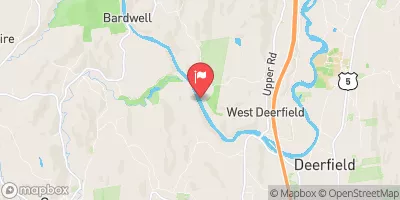 Deerfield River Near West Deerfield
|
340cfs |
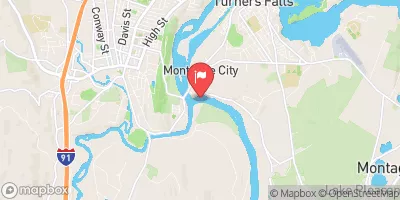 Connecticut River At Montague City
|
4540cfs |
Dam Data Reference
Condition Assessment
SatisfactoryNo existing or potential dam safety deficiencies are recognized. Acceptable performance is expected under all loading conditions (static, hydrologic, seismic) in accordance with the minimum applicable state or federal regulatory criteria or tolerable risk guidelines.
Fair
No existing dam safety deficiencies are recognized for normal operating conditions. Rare or extreme hydrologic and/or seismic events may result in a dam safety deficiency. Risk may be in the range to take further action. Note: Rare or extreme event is defined by the regulatory agency based on their minimum
Poor A dam safety deficiency is recognized for normal operating conditions which may realistically occur. Remedial action is necessary. POOR may also be used when uncertainties exist as to critical analysis parameters which identify a potential dam safety deficiency. Investigations and studies are necessary.
Unsatisfactory
A dam safety deficiency is recognized that requires immediate or emergency remedial action for problem resolution.
Not Rated
The dam has not been inspected, is not under state or federal jurisdiction, or has been inspected but, for whatever reason, has not been rated.
Not Available
Dams for which the condition assessment is restricted to approved government users.
Hazard Potential Classification
HighDams assigned the high hazard potential classification are those where failure or mis-operation will probably cause loss of human life.
Significant
Dams assigned the significant hazard potential classification are those dams where failure or mis-operation results in no probable loss of human life but can cause economic loss, environment damage, disruption of lifeline facilities, or impact other concerns. Significant hazard potential classification dams are often located in predominantly rural or agricultural areas but could be in areas with population and significant infrastructure.
Low
Dams assigned the low hazard potential classification are those where failure or mis-operation results in no probable loss of human life and low economic and/or environmental losses. Losses are principally limited to the owner's property.
Undetermined
Dams for which a downstream hazard potential has not been designated or is not provided.
Not Available
Dams for which the downstream hazard potential is restricted to approved government users.
Area Campgrounds
| Location | Reservations | Toilets |
|---|---|---|
 Mohawk Trail State Forest
|
||
 Barton Cove
|
||
 DAR State Forest
|
 Deerfield No. 4
 Rocky Mountain Park
 Pelham Lake Park
 Green Mountain National Forest
 Conway State Forest