Dry Fork Campsite 4 Campground
Community Reviews
Been here? Share the conditions.
Reviews, ratings & photos are added in the free Snoflo iOS app — rate a spot, tag the conditions, and your visit is verified by location. Add or manage your reviews from the app.
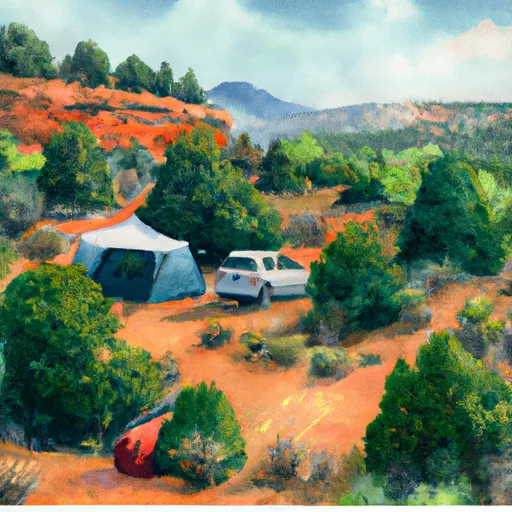
Dry Fork Campsite 4
The campground amenities are limited, with no running water or toilets available, so visitors will need to bring their own supplies and pack out their trash. However, the site does offer a fire pit and picnic table for campers to use.
One interesting fact about the area is that it is known for its incredible star gazing opportunities, as the lack of light pollution allows for a clear view of the night sky. Campers can also enjoy scenic drives, wildlife viewing, and fishing in nearby streams and rivers.
The best time of year to visit Dry Fork Campsite 4 is during the summer months, from June to August, when the average temperatures range from 70-80 degrees Fahrenheit during the day and 40-50 degrees Fahrenheit at night. However, visitors should be prepared for sudden changes in weather, as temperatures can drop quickly at higher elevations.
Overall, Dry Fork Campsite 4 is a great choice for those looking for a remote, primitive camping experience with stunning views and easy access to hiking trails and other outdoor activities.
What's on-site at Dry Fork Campsite 4
Key facilities Snoflo tracks for this campground. Confirm with the operator before booking -- amenities can change seasonally.
Plan your trip down to the hour
Same weather feed Snoflo's iOS app uses -- updated continuously from NOAA / yr.no.
Next 5 days, hour by hour
Temperature line with weather symbols on top, snow + rain accumulation as columns, humidity as a dotted line.
5-day forecast table
Every 3 hours, broken out across temperature, snow, rain, humidity, and wind. Each cell is colour-coded relative to the column min/max so trends jump out at a glance.
| Time | Condition | Temp (°F) | Snow (in) | Rain (in) | Humidity (%) | Wind (mps) | Wind dir |
|---|---|---|---|---|---|---|---|
| Loading detailed forecast… | |||||||
15-day temperature & precipitation
Daily temperatures, snow, and rain projected over the next two weeks. Hover any point for the full breakdown.
Other campgrounds in the area
Snoflo-tracked campsites within driving distance of Dry Fork Campsite 4, with reservations status.
| Campground | Reservations | Toilets | View |
|---|---|---|---|
| Dry Fork Campsite 3 | ✗ | ✗ | → |
| Dry Fork Campsite 5 | ✗ | ✗ | → |
| Dry Fork Campsite 2 | ✗ | ✗ | → |
| Dry Fork Campsite 1 | ✗ | ✗ | → |
| Massey Meadow Camping Area | ✗ | ✗ | → |
Nearby streamflow
USGS streamgauges within reach of Dry Fork Campsite 4 -- pulled live from the National Water Information System.
| Streamgauge | Discharge | View |
|---|---|---|
| Ashley Cr Abv Sp Nr Vernal Ut | 4 cfs | → |
| Ashley Creek Near Vernal | 160 cfs | → |
| Whiterocks River Near Whiterocks | 324 cfs | → |
| Big Brush Creek Abv Red Fleet Res | 40 cfs | → |
| Uinta River Blw Powerplant Diversion Nr Neola | 307 cfs | → |
| Uinta River At Randlett | 285 cfs | → |
Nearby snow depths
NRCS SNOTEL stations within reach of Dry Fork Campsite 4 -- relevant when planning a shoulder-season or alpine trip.
| SNOTEL station | Snowpack | 24h Snowfall | View |
|---|---|---|---|
| Mosby Mtn. | 1.0 in | 0.0 in | → |
| Nohrsc Mosby Mtn. | 1.0 in | 0.0 in | → |
| Trout Creek | 0.0 in | 0.0 in | → |
| Trout Creek | 0.0 in | 0.0 in | → |
| Nohrsc King's Cabin | 0.0 in | 0.0 in | → |
| King's Cabin | 1.0 in | 0.0 in | → |
Plan a longer trip
The closest parks, lakes, boat launches, and paddle runs so a camping night can grow into a full weekend.
Parks
- Steinaker State Park
- Vernal City Park
- Utah Field House Of Natural Historic State Park Museum
- Red Fleet State Park
- Flaming Gorge National Recreation Area
- State Conservation Area Utah State Department Of Wildlife Resources 166
Boat launches
- Steinaker State Park
- Red Fleet State Park
- Ute Mountain Trail Daggett County
- Forest Road 009 Daggett County
- Spirit Lake
- Sheep Creek Bay
Fishing spots
- Ashley Twin Lakes
- Red Fleet Reservoir
- Little Brush Creek
- Bullock Draw Reservoir
- Montes Creek Reservoir
- Browne Reservoir
Camping essentials & Leave No Trace
- Pack it in, pack it out
- Take all trash, food scraps, and gear back with you to keep campsites clean and protect wildlife.
- Respect wildlife
- Observe animals from a distance, store food securely, and never feed wildlife to maintain natural behavior and safety.
- Know before you go
- Check weather, fire restrictions, trail conditions, and permit requirements to ensure a safe and well-planned trip.
- Minimize campfire impact
- Use established fire rings, keep fires small, fully extinguish them, or opt for a camp stove when fires are restricted.
- Leave what you find
- Preserve natural and cultural features by avoiding removal of plants, rocks, artifacts, or other elements of the environment.
Set push alerts in the Snoflo app
Save Dry Fork Campsite 4 as a favorite, set a custom threshold (precipitation, snowpack, freezing temperatures), and the iOS app will push the moment conditions cross.
About Dry Fork Campsite 4
Can I make reservations at Dry Fork Campsite 4?
This campground does not appear to accept reservations -- it's typically first-come, first-served. Arrive early on summer weekends.
How fresh is the weather data on this page?
The hourly forecast updates throughout the day from the NOAA / yr.no public feeds. Streamflow data is pulled live from USGS streamgauges and snowpack from the NRCS SNOTEL network.
What's the best time of year to visit?
Use the 15-day temperature & precipitation outlook on this page to plan -- pick a window with comfortable temperatures and low precipitation. For longer trips, the 5-day hourly meteogram shows snow + rain accumulation hour-by-hour.
How do I get to Dry Fork Campsite 4?
Tap Directions in the hero above to open driving directions in Google Maps, or Open in map to center the Snoflo interactive map on the campground.
Can I get alerts when conditions change?
Yes -- alerts are managed through the Snoflo iOS app. Favorite this campground, set a threshold (temperature, snowpack, precipitation), and you'll get a push the moment it crosses.
Other campgrounds near here
Snoflo-tracked campgrounds within driving distance of Dry Fork Campsite 4.
Create a free account, or sign in.
Get the free Dry Fork Campsite 4 report — alerts, favorites, and history & forecasts, plus the free iPhone app.
Pick your camping window two weeks out.
Snoflo Premium adds 15-day forecasts at every campground, weather alerts for your saved spots, and full seasonal history.