Breakheart Pond Dam

Breakheart Pond
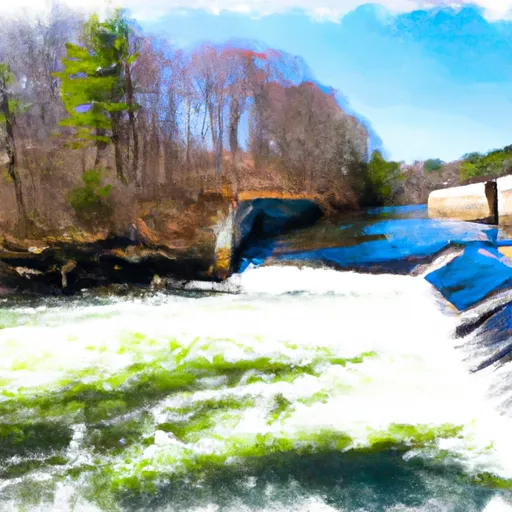
Breakheart Pond, located in Exeter, Rhode Island, is a captivating water resource managed by the USDA NRCS. This fish and wildlife pond, with a primary purpose of enhancing natural habitats, was completed in 1900 and features an earth dam standing at 13 feet high and 300 feet long. With a storage capacity of 300 acre-feet and a surface area of 48 acres, Breakheart Pond provides essential habitat for local flora and fauna while also serving as a recreational spot for nature enthusiasts.
Despite its historical significance, Breakheart Pond's condition assessment is currently rated as poor, with a very high risk level. The dam's hazard potential is classified as low, but the overall risk management measures are not specified. The spillway, which is controlled with a width of 41 feet, helps regulate water flows in the pond. While there is no regular inspection schedule in place, the pond remains a vital water feature in the area, supporting the local ecosystem and providing opportunities for outdoor activities.
As a valuable part of Washington County's water resources, Breakheart Pond offers a serene setting for climate and water resource enthusiasts to explore. With its rich history, diverse wildlife, and recreational opportunities, this pond serves as a reminder of the importance of preserving and maintaining our natural water sources for future generations to enjoy.
Inside the reservoir
The real shoreline of this water body, with a depth model scaled so the basin holds exactly its recorded storage. Drag to orbit, scroll to zoom, and use the slider to drain and refill it. Click anywhere on the basin for the modelled depth there.
NID normal pool storage (250 AF) over this shoreline implies a 13 ft basin, deeper than the 13 ft dam. Depth capped to the dam; storage shown is modelled, not NID.
How this is built. The shoreline is the National Hydrography
Dataset polygon for this water body (“Breakheart Pond”),
matched to the dam by proximity and confirmed by comparing its area with the
National Inventory of Dams surface area (agreement 0.823×).
Depth is modelled, not surveyed: the basin is shaped by distance from
shore — deep in open water, shallow in the bays — and scaled so its
volume equals the recorded storage. No national bathymetric survey exists for
US reservoirs. Treat the shoreline, area and volume as measured, and the depth
distribution as an informed approximation.
Above normal pool, water is shown rising within the normal-pool
shoreline. Where it would actually spread depends on the surrounding
terrain, which is not modelled here — a reservoir in a steep canyon barely
widens, one on flat ground can spread a long way. This is a depth and volume
figure, not an inundation map. Official inundation mapping for a dam
comes from its Emergency Action Plan.
Plan around the weather
Same NOAA / yr.no feed Snoflo's iOS app uses. Watch the precipitation column on the meteogram -- rain on the basin upstream typically lifts inflow 24-72 hours later.
Next 5 days, hour by hour
Temperature line with weather symbols on top, snow + rain accumulation as columns, humidity as a dotted line.
5-day forecast table
Every 3 hours, broken out across temperature, snow, rain, humidity, and wind. Each cell is colour-coded relative to the column min/max.
| Time | Condition | Temp (°F) | Snow (in) | Rain (in) | Humidity (%) | Wind (mps) | Wind dir |
|---|---|---|---|---|---|---|---|
| Loading detailed forecast… | |||||||
15-day temperature & precipitation
Daily temperatures, snow, and rain projected over the next two weeks.
Nearby streamflow gauges
USGS streamgauges around Breakheart Pond -- inflows here typically show up in storage 24-72 hours later.
| Streamgauge | Discharge | View |
|---|---|---|
| Wood River Near Arcadia | 61 cfs | → |
| Nooseneck River At Nooseneck | 13 cfs | → |
| Wood River At Hope Valley | 121 cfs | → |
| Queen R At Liberty Rd At Liberty Ri | 34 cfs | → |
| Beaver River Near Usquepaug | 22 cfs | → |
| South Branch Pawtuxet River At Washington | 99 cfs | → |






About Breakheart Pond
Where does the data for Breakheart Pond come from?
Structural and regulatory data come from the U.S. Army Corps of Engineers' National Inventory of Dams (NID). Weather forecast comes from NOAA / yr.no -- the same feed Snoflo's iOS app uses.
How often is the report updated?
NID structural data refreshes annually as the Corps publishes updated assessments. The weather forecast refreshes throughout the day.
What does the Low hazard rating mean?
The Corps of Engineers' hazard potential classification grades probable consequences if the dam fails: High = probable loss of human life; Significant = no probable loss of human life but possible economic loss / environmental damage; Low = no probable loss of human life, only minor economic / environmental losses. See the Dam Data Reference card below for the full definitions.
What's "% of normal"?
The current storage value compared to the historical average storage on this calendar day. 100% = right on average; values above 100% mean above-normal storage (wet year); values below mean below-normal (dry year or drought).
Can I get alerts when storage crosses a threshold?
Yes -- alerts are managed in the Snoflo iOS app. Favorite this dam, set a threshold, and you'll get a push the moment conditions cross.
Dam data reference
Condition Assessment
- Satisfactory
- No existing or potential dam safety deficiencies are recognized. Acceptable performance is expected under all loading conditions (static, hydrologic, seismic) in accordance with the minimum applicable state or federal regulatory criteria or tolerable risk guidelines.
- Fair
- No existing dam safety deficiencies are recognized for normal operating conditions. Rare or extreme hydrologic and/or seismic events may result in a dam safety deficiency. Risk may be in the range to take further action.
- Poor
- A dam safety deficiency is recognized for normal operating conditions which may realistically occur. Remedial action is necessary. POOR may also be used when uncertainties exist as to critical analysis parameters which identify a potential dam safety deficiency.
- Unsatisfactory
- A dam safety deficiency is recognized that requires immediate or emergency remedial action for problem resolution.
- Not Rated
- The dam has not been inspected, is not under state or federal jurisdiction, or has been inspected but, for whatever reason, has not been rated.
Hazard Potential Classification
- High
- Dams assigned the high hazard potential classification are those where failure or mis-operation will probably cause loss of human life.
- Significant
- Dams assigned the significant hazard potential classification are those dams where failure or mis-operation results in no probable loss of human life but can cause economic loss, environmental damage, disruption of lifeline facilities, or impact other concerns. Significant hazard potential classification dams are often located in predominantly rural or agricultural areas but could be in areas with population and significant infrastructure.
- Low
- Dams assigned the low hazard potential classification are those where failure or mis-operation results in no probable loss of human life and low economic and/or environmental losses. Losses are principally limited to the owner's property.
- Undetermined
- Dams for which a downstream hazard potential has not been designated or is not provided.