
Rivermill Hydro Dam Reservoir Report
Last Updated: January 2, 2026
Rivermill Hydro Dam, also known as Hdi Mascoma, is a private hydroelectric structure located in Lebanon, New Hampshire along the Mascoma River.
°F
°F
mph
Wind
%
Humidity
Summary
Completed in 1925, this concrete dam stands at a height of 22.4 feet and has a length of 300 feet. With a normal storage capacity of 170 acre-feet and a maximum storage of 210 acre-feet, the dam serves as a crucial source of renewable energy for the region.
Despite its age, Rivermill Hydro Dam has faced challenges in terms of its condition assessment, which was rated as poor during the last inspection in August 2018. The dam has been designated with a high hazard potential, emphasizing the need for regular monitoring and maintenance to ensure its safety and functionality. While the hazard potential is high, the overall risk assessment for the dam is categorized as moderate (3), indicating a manageable level of risk with appropriate risk management measures in place.
As a significant contributor to the local hydroelectric power generation and water resource management, Rivermill Hydro Dam plays a vital role in supporting the sustainable development and resilience of the surrounding communities. Its historical significance and continued operation highlight the importance of balancing energy production with environmental conservation and safety considerations in the face of changing climate patterns and water resource management challenges.
Year Completed |
1925 |
Dam Length |
300 |
Dam Height |
22.4 |
River Or Stream |
MASCOMA RIVER |
Primary Dam Type |
Concrete |
Surface Area |
7.8 |
Drainage Area |
188 |
Nid Storage |
210 |
Hazard Potential |
High |
Foundations |
Unlisted/Unknown |
Nid Height |
22 |
Seasonal Comparison
Weather Forecast
Nearby Streamflow Levels
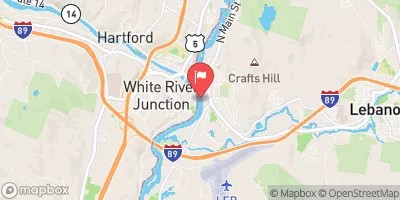 Connecticut River At West Lebanon
|
6740cfs |
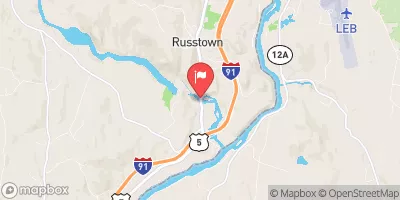 Ottauquechee River At North Hartland
|
236cfs |
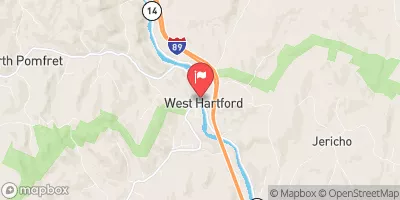 White River At West Hartford
|
810cfs |
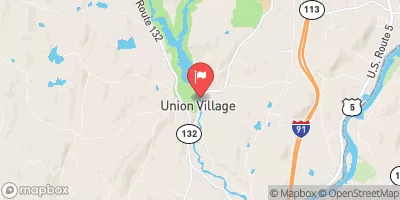 Ompompanoosuc River At Union Village
|
16cfs |
 Sugar River At West Claremont
|
378cfs |
 Baker River Near Rumney
|
169cfs |
Dam Data Reference
Condition Assessment
SatisfactoryNo existing or potential dam safety deficiencies are recognized. Acceptable performance is expected under all loading conditions (static, hydrologic, seismic) in accordance with the minimum applicable state or federal regulatory criteria or tolerable risk guidelines.
Fair
No existing dam safety deficiencies are recognized for normal operating conditions. Rare or extreme hydrologic and/or seismic events may result in a dam safety deficiency. Risk may be in the range to take further action. Note: Rare or extreme event is defined by the regulatory agency based on their minimum
Poor A dam safety deficiency is recognized for normal operating conditions which may realistically occur. Remedial action is necessary. POOR may also be used when uncertainties exist as to critical analysis parameters which identify a potential dam safety deficiency. Investigations and studies are necessary.
Unsatisfactory
A dam safety deficiency is recognized that requires immediate or emergency remedial action for problem resolution.
Not Rated
The dam has not been inspected, is not under state or federal jurisdiction, or has been inspected but, for whatever reason, has not been rated.
Not Available
Dams for which the condition assessment is restricted to approved government users.
Hazard Potential Classification
HighDams assigned the high hazard potential classification are those where failure or mis-operation will probably cause loss of human life.
Significant
Dams assigned the significant hazard potential classification are those dams where failure or mis-operation results in no probable loss of human life but can cause economic loss, environment damage, disruption of lifeline facilities, or impact other concerns. Significant hazard potential classification dams are often located in predominantly rural or agricultural areas but could be in areas with population and significant infrastructure.
Low
Dams assigned the low hazard potential classification are those where failure or mis-operation results in no probable loss of human life and low economic and/or environmental losses. Losses are principally limited to the owner's property.
Undetermined
Dams for which a downstream hazard potential has not been designated or is not provided.
Not Available
Dams for which the downstream hazard potential is restricted to approved government users.
Area Campgrounds
| Location | Reservations | Toilets |
|---|---|---|
 Velvet Rocks Shelter
|
||
 Storrs Pond Rec Area
|
||
 Campsite 5
|
||
 Campsite 12
|
||
 Campsite 16
|
||
 Campsite 14
|
 Rivermill Hydro Dam
 Connecticut River boat launch