

Beloit Reservoir Report
Last Updated: May 2, 2026
Nearby: Rockton Kiowa Crossing Dam
°F
°F
mph
Wind
%
Humidity
Located in Beloit, Wisconsin, the Beloit Dam on the Rock River is a hydroelectric structure completed in 1928 with a primary purpose of generating electricity.
Summary
This concrete gravity dam stands at 15 feet in height and stretches 350 feet in length, creating a reservoir with a storage capacity of 3,255 acre-feet. The dam's spillway is controlled, with a width of 274 feet, and it has a low hazard potential according to assessments.
The Beloit Dam plays a crucial role in water resource management, with a maximum discharge capacity of 13,000 cubic feet per second and a drainage area of 3,355 square miles. The dam's emergency action plan has been updated as of January 2021, ensuring that it meets guidelines for risk management. Despite its age, the dam is regularly inspected by the Federal Energy Regulatory Commission, with the last inspection conducted in September 2019, highlighting its importance in ensuring safety and efficiency in water utilization and climate resilience in the region.
With its vital role in hydroelectric power generation and water storage on the Rock River, the Beloit Dam serves as a key infrastructure for water resource and climate enthusiasts to study and appreciate. Its historical significance, engineering design, and environmental impact make it an essential structure in managing water flow, mitigating risks, and harnessing renewable energy in the region, contributing to sustainable development and resilience in the face of changing climate conditions.
Regional Streamflow Levels
 Rock River At Rockton
|
13100cfs |
 Rock River At Afton
|
8520cfs |
 Pecatonica River Nr Shirland
|
3780cfs |
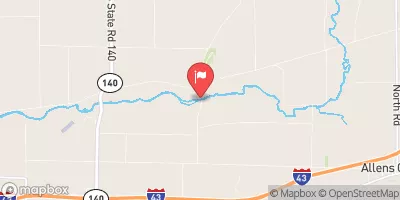 Turtle Creek At Carvers Rock Road Near Clinton
|
238cfs |
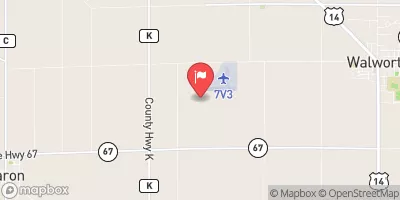 Piscasaw Creek Near Walworth
|
4cfs |
 Kishwaukee River At Belvidere
|
679cfs |
15-Day Long Term Forecast
Year Completed |
1928 |
Dam Length |
350 |
Dam Height |
15 |
River Or Stream |
RockRiver |
Surface Area |
485 |
Drainage Area |
3355 |
Nid Storage |
3255 |
Outlet Gates |
Slide (sluice gate) - 9, Tainter (radial) - 2 |
Hazard Potential |
Low |
Nid Height |
15 |
Seasonal Comparison
5-Day Hourly Forecast Detail
Dam Data Reference
Condition Assessment
SatisfactoryNo existing or potential dam safety deficiencies are recognized. Acceptable performance is expected under all loading conditions (static, hydrologic, seismic) in accordance with the minimum applicable state or federal regulatory criteria or tolerable risk guidelines.
Fair
No existing dam safety deficiencies are recognized for normal operating conditions. Rare or extreme hydrologic and/or seismic events may result in a dam safety deficiency. Risk may be in the range to take further action. Note: Rare or extreme event is defined by the regulatory agency based on their minimum
Poor A dam safety deficiency is recognized for normal operating conditions which may realistically occur. Remedial action is necessary. POOR may also be used when uncertainties exist as to critical analysis parameters which identify a potential dam safety deficiency. Investigations and studies are necessary.
Unsatisfactory
A dam safety deficiency is recognized that requires immediate or emergency remedial action for problem resolution.
Not Rated
The dam has not been inspected, is not under state or federal jurisdiction, or has been inspected but, for whatever reason, has not been rated.
Not Available
Dams for which the condition assessment is restricted to approved government users.
Hazard Potential Classification
HighDams assigned the high hazard potential classification are those where failure or mis-operation will probably cause loss of human life.
Significant
Dams assigned the significant hazard potential classification are those dams where failure or mis-operation results in no probable loss of human life but can cause economic loss, environment damage, disruption of lifeline facilities, or impact other concerns. Significant hazard potential classification dams are often located in predominantly rural or agricultural areas but could be in areas with population and significant infrastructure.
Low
Dams assigned the low hazard potential classification are those where failure or mis-operation results in no probable loss of human life and low economic and/or environmental losses. Losses are principally limited to the owner's property.
Undetermined
Dams for which a downstream hazard potential has not been designated or is not provided.
Not Available
Dams for which the downstream hazard potential is restricted to approved government users.
 Hononegah Forest Preserve Campground
 Rivers Edge Campground
 Sugar River Forest Preserve - Pine Tree
 Sugar River Forest Preserve - Riverfront
 Camp Indian Trails
 E.T. Seton
 Lake Waubesa At Mc Farland
 Lake Monona At Madison
 Nippersink Lake At Fox Lake
 Lake Mendota At Madison
 Channel Lake Near Antioch
 Fox Lake Near Lake Villa
 Rock River Lagoon Beach- Beloit Riverside Park
 Fishing Allowed
 Fishing Allowed here
 McCullom Lake
 Spring Grove Rearing Area
 Turner Lake
 Continue with Snoflo Premium