
Summary
The dam at Beartree, completed in 1980, serves primarily for fish and wildlife pond purposes, with a storage capacity of 160 acre-feet and a maximum discharge of 6370 cubic feet per second. The dam is an earth structure standing at 30 feet in height and 150 feet in length, with a controlled spillway and slide gates for outlet control.
Despite being classified as low hazard potential and not currently rated for condition assessment, Beartree poses a very high risk in terms of its risk assessment profile. The site has not been inspected since 2011, with an inspection frequency of 10 years, indicating potential concerns for the infrastructure's long-term maintenance and upkeep. The emergency action plan status, inundation maps, and risk management measures for Beartree are all currently reported as unknown or not prepared, underscoring the need for closer monitoring and mitigation strategies. Overall, Beartree presents an intriguing case study for water resource and climate enthusiasts, highlighting the delicate balance between recreational uses and dam safety considerations in natural settings.
Year Completed |
1980 |
Dam Length |
150 |
Dam Height |
30 |
River Or Stream |
STRAIGHT BRANCH |
Primary Dam Type |
Earth |
Hydraulic Height |
30 |
Drainage Area |
4 |
Nid Storage |
160 |
Structural Height |
30 |
Outlet Gates |
Slide (sluice gate) |
Hazard Potential |
Low |
Nid Height |
30 |
Seasonal Comparison
Weather Forecast
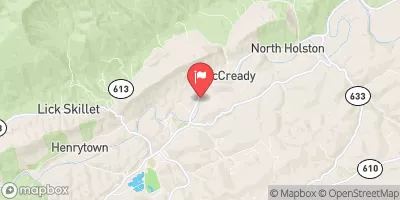
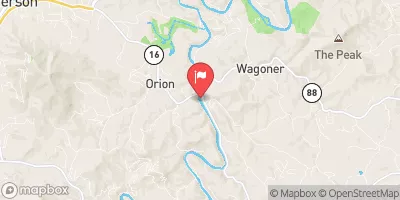
Nearby Streamflow Levels
Dam Data Reference
Condition Assessment
SatisfactoryNo existing or potential dam safety deficiencies are recognized. Acceptable performance is expected under all loading conditions (static, hydrologic, seismic) in accordance with the minimum applicable state or federal regulatory criteria or tolerable risk guidelines.
Fair
No existing dam safety deficiencies are recognized for normal operating conditions. Rare or extreme hydrologic and/or seismic events may result in a dam safety deficiency. Risk may be in the range to take further action. Note: Rare or extreme event is defined by the regulatory agency based on their minimum
Poor A dam safety deficiency is recognized for normal operating conditions which may realistically occur. Remedial action is necessary. POOR may also be used when uncertainties exist as to critical analysis parameters which identify a potential dam safety deficiency. Investigations and studies are necessary.
Unsatisfactory
A dam safety deficiency is recognized that requires immediate or emergency remedial action for problem resolution.
Not Rated
The dam has not been inspected, is not under state or federal jurisdiction, or has been inspected but, for whatever reason, has not been rated.
Not Available
Dams for which the condition assessment is restricted to approved government users.
Hazard Potential Classification
HighDams assigned the high hazard potential classification are those where failure or mis-operation will probably cause loss of human life.
Significant
Dams assigned the significant hazard potential classification are those dams where failure or mis-operation results in no probable loss of human life but can cause economic loss, environment damage, disruption of lifeline facilities, or impact other concerns. Significant hazard potential classification dams are often located in predominantly rural or agricultural areas but could be in areas with population and significant infrastructure.
Low
Dams assigned the low hazard potential classification are those where failure or mis-operation results in no probable loss of human life and low economic and/or environmental losses. Losses are principally limited to the owner's property.
Undetermined
Dams for which a downstream hazard potential has not been designated or is not provided.
Not Available
Dams for which the downstream hazard potential is restricted to approved government users.
Area Campgrounds
| Location | Reservations | Toilets |
|---|---|---|
 Beartree
|
||
 Beartree Recreation Area
|
||
 Backbone Rock Rec Area
|
||
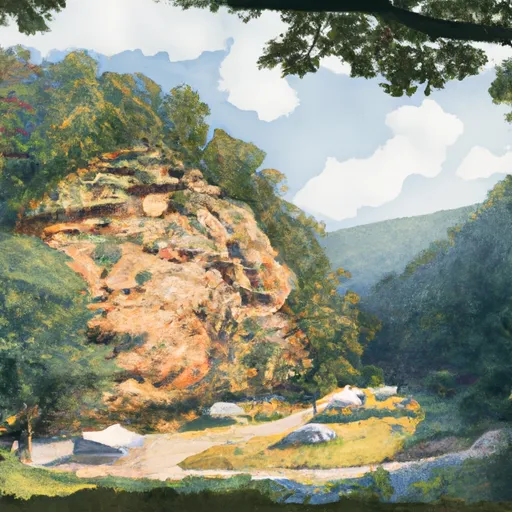 Backbone Rock Recreation Area
|
||
 Backbone Rock Campground
|
||
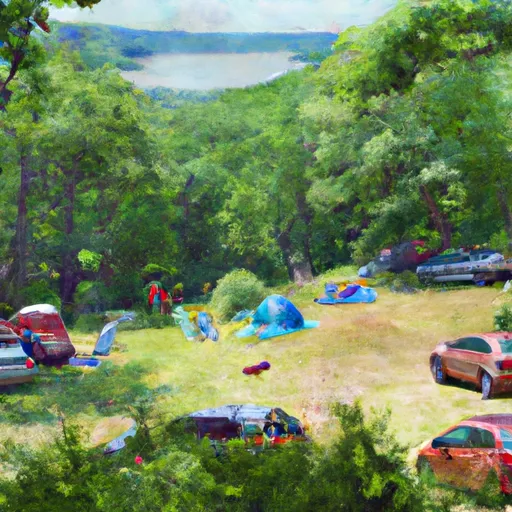 Grindstone
|
 Beartree
 Green Cove--Jefferson Nf Near Confluence Of Star Hill Branch To Confluence With Whitetop Laurel
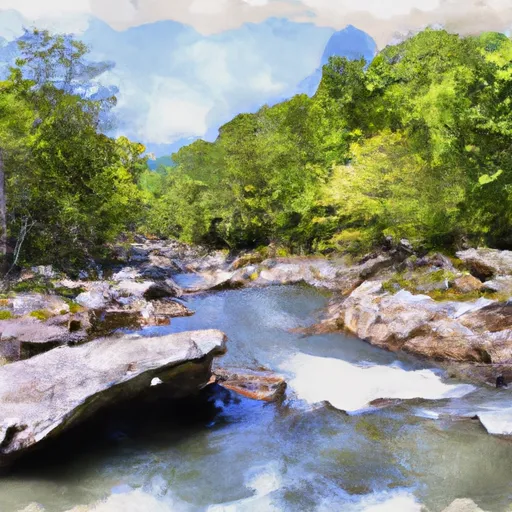 Whitetop Laurel--Jefferson Nf Boundary (Intersection Of Hwy 58 And Sr 859) To Jefferson Nf Boundary Above Damascus