
Big Rock Ranch Reservoir Report
Nearby: Novato Creek Peters
Last Updated: December 5, 2025
Big Rock Ranch, located in Nicasio, Marin County, California, is a privately owned Earth dam built in 2002 primarily for water supply purposes.
°F
°F
mph
Wind
%
Humidity
Summary
The dam stands at a height of 45 feet and has a maximum storage capacity of 91.3 acre-feet, serving as a vital resource for the surrounding area. Situated along the Nicasio Creek Tributary to Lagunitas Creek, the dam plays a crucial role in ensuring water availability for both recreational activities and domestic use.
Despite its high hazard potential, Big Rock Ranch has been assessed to be in satisfactory condition, with regular inspections conducted by the state regulatory agency, Department of Water Resources (DWR), Safety of Dams. The dam's emergency action plan (EAP) was last revised in January 2021, emphasizing the importance of preparedness and risk management measures. With a drainage area of 0.52 square miles and a surface area of 7 acres, the dam contributes significantly to the water supply infrastructure in the region, highlighting its critical role in water resource management and climate resilience efforts.
Managed by private owners, Big Rock Ranch serves as a key asset in maintaining water security and supporting the local ecosystem. The dam's strategic location and design not only ensure adequate water storage but also contribute to the overall water management system in the area. With its strong enforcement, inspection, and regulatory measures in place, Big Rock Ranch stands as a testament to effective dam operations and underscores the importance of sustainable water resource management in combating the challenges of climate change.
Year Completed |
2002 |
Dam Length |
490 |
Dam Height |
45 |
River Or Stream |
Nicasio Creek Trib To Lagunitas Creek |
Primary Dam Type |
Earth |
Surface Area |
7 |
Hydraulic Height |
39 |
Drainage Area |
0.52 |
Nid Storage |
91.3 |
Hazard Potential |
High |
Nid Height |
45 |
Seasonal Comparison
Weather Forecast
Nearby Streamflow Levels

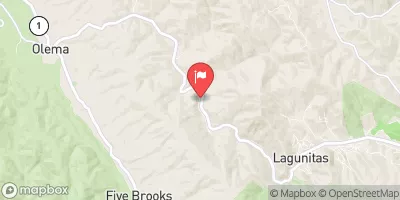
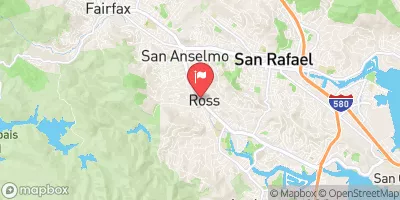
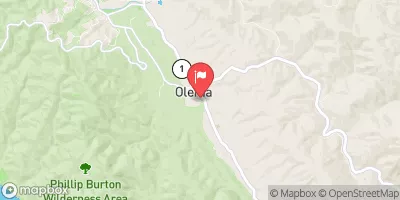
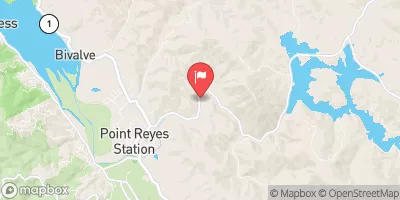

Dam Data Reference
Condition Assessment
SatisfactoryNo existing or potential dam safety deficiencies are recognized. Acceptable performance is expected under all loading conditions (static, hydrologic, seismic) in accordance with the minimum applicable state or federal regulatory criteria or tolerable risk guidelines.
Fair
No existing dam safety deficiencies are recognized for normal operating conditions. Rare or extreme hydrologic and/or seismic events may result in a dam safety deficiency. Risk may be in the range to take further action. Note: Rare or extreme event is defined by the regulatory agency based on their minimum
Poor A dam safety deficiency is recognized for normal operating conditions which may realistically occur. Remedial action is necessary. POOR may also be used when uncertainties exist as to critical analysis parameters which identify a potential dam safety deficiency. Investigations and studies are necessary.
Unsatisfactory
A dam safety deficiency is recognized that requires immediate or emergency remedial action for problem resolution.
Not Rated
The dam has not been inspected, is not under state or federal jurisdiction, or has been inspected but, for whatever reason, has not been rated.
Not Available
Dams for which the condition assessment is restricted to approved government users.
Hazard Potential Classification
HighDams assigned the high hazard potential classification are those where failure or mis-operation will probably cause loss of human life.
Significant
Dams assigned the significant hazard potential classification are those dams where failure or mis-operation results in no probable loss of human life but can cause economic loss, environment damage, disruption of lifeline facilities, or impact other concerns. Significant hazard potential classification dams are often located in predominantly rural or agricultural areas but could be in areas with population and significant infrastructure.
Low
Dams assigned the low hazard potential classification are those where failure or mis-operation results in no probable loss of human life and low economic and/or environmental losses. Losses are principally limited to the owner's property.
Undetermined
Dams for which a downstream hazard potential has not been designated or is not provided.
Not Available
Dams for which the downstream hazard potential is restricted to approved government users.
Area Campgrounds
| Location | Reservations | Toilets |
|---|---|---|
 Camp Taylor
|
||
 Madrone Group Camp
|
||
 Orchard Hill Campground
|
||
 Five Brooks Horse Camp
|
||
 China Camp State Park
|
||
 Olema Campground
|
 Big Rock Ranch
 Kent
Kent
 Bon Tempe
 Nicasio
 Alpine Lake
 Soulajule Dam
 Steven Way 98, Marin County
 Headwaters To Ends One Quarter Mile South Of Bear Valley Road Bridge
Segment 1: Ends 1/4 Mile South Of Bear Valley Road Bridge Segment 2: Caltrans Corporation Yard At Point Reyes Staton.
Headwaters To Ends One Quarter Mile South Of Bear Valley Road Bridge
Segment 1: Ends 1/4 Mile South Of Bear Valley Road Bridge Segment 2: Caltrans Corporation Yard At Point Reyes Staton.
 Olema Ranch Campground To Caltrans Corporation Yard At Point Reyes Station
 Headwaters To Mouth
 Ignacio Valley Preserve
 Loma Alta Preserve
 Marin Highlands Park
 Josef Hoog Park
 Lucas Valley Preserve